Loading…
Venue: Room: Grand Ballroom B (Street Level) clear filter
Thursday, November 5
 

10:30am PST

The Human Approval Button Is Not a Security Boundary
Thursday November 5, 2026 10:30am - 11:15am PST
Agentic AI applications increasingly rely on human approval before taking sensitive actions such as sending messages, modifying records, querying business systems, creating tickets, or invoking external tools. Human-in-the-loop review is often treated as a safety control, but the approval step is only as strong as the context it exposes.

This talk examines a practical implementation problem in agentic AI systems: approval screens can become misleading security boundaries. A user may approve a clean summary while missing the full tool parameters, source data, retrieved context, permissions, prior agent steps, or downstream effects behind the action. In these cases, the human is technically “in the loop,” but not given enough information to make a meaningful security decision.

The session will show how AppSec teams can review human approval flows as part of the application’s security boundary. It will cover common failure modes, including vague approval prompts, missing tool arguments, hidden data sources, incomplete audit trails, approval after unsafe context has already been used, and approval screens that summarize intent without showing impact.

Attendees will leave with a practical checklist for reviewing approval gates in agentic workflows: what the user should see, what should be enforced outside the model, what should be logged, what should require step-up approval, and what should never depend on a model-generated summary alone.
Speakers
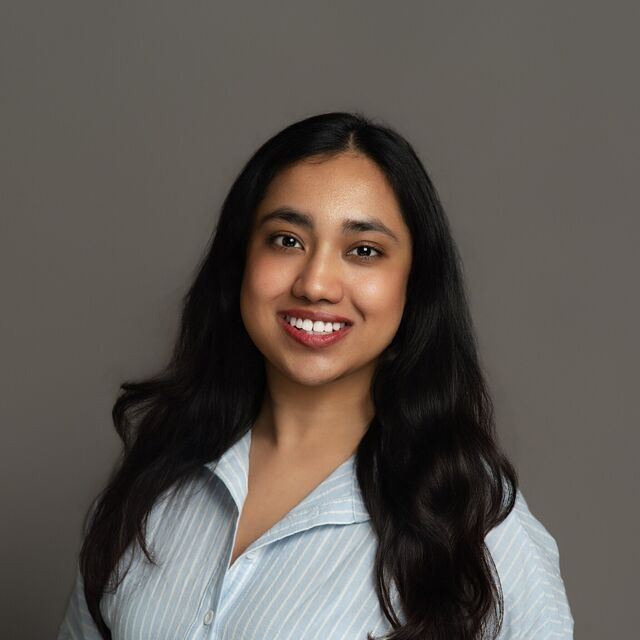
avatar for Anusha Vajha

Anusha Vajha

Security Engineer and Product Manager
Anusha Vajha is a cybersecurity practitioner focused on AI governance, product security, and enterprise AI risk. She has worked across security operations, GRC, detection engineering, and product security in healthcare, financial services, and startup environments.
Her work sits a... Read More →
Thursday November 5, 2026 10:30am - 11:15am PST
Room: Grand Ballroom B (Street Level)

11:30am PST

Crypto Is Fine. The Code Is Not: OWASP A04 Cryptographic Failures Through Real-World CVEs
Thursday November 5, 2026 11:30am - 12:15pm PST
Cryptography has a reputation for being intimidating, mathematical, and difficult to reason about. In reality, many cryptographic failures in production systems have very little to do with cryptography itself. They happen because of small implementation mistakes such as skipping a validation check, trusting unvalidated input, or selecting the wrong algorithm.

In this talk, we take a practical and data-driven look at the OWASP Cryptographic Failures category using GitHub Security Advisories collected as of January 2026. We begin with a brief overview of how these vulnerabilities are distributed across CWEs, then focus on two of the most common failure patterns. Using real vulnerable open source libraries, we examine signature verification bypasses and algorithm confusion bugs.

Rather than only showing exploits, this talk actively involves the audience. For each case study, we pause at key moments and work through the vulnerability together, asking questions like what inputs could be sent or what assumptions might be broken. Live demos and CTF-style challenges are used throughout, making the session interactive and approachable even without a cryptography background.
Speakers
avatar for Diptendu Kar

Diptendu Kar

Security Researcher, Semgrep
Diptendu Kar is a security researcher focused on supply chain and dependency risk. He works on triaging open-source vulnerabilities, writing detection rules, and exploring how AI can automate tedious parts of security research. He also teaches Software Security Practices at Northeastern... Read More →
Thursday November 5, 2026 11:30am - 12:15pm PST
Room: Grand Ballroom B (Street Level)

1:15pm PST

Panel Discussion
Thursday November 5, 2026 1:15pm - 2:00pm PST

Thursday November 5, 2026 1:15pm - 2:00pm PST
Room: Grand Ballroom B (Street Level)

2:15pm PST

When the Robot Writes the Bug: A Merge Gate for AI-Generated Code
Thursday November 5, 2026 2:15pm - 3:00pm PST
AI coding assistants now write a real share of what we ship, and a stubborn fraction of that code is insecure: SQL injection, hardcoded secrets, weak crypto, unsafe deserialization. The obvious move is to point the same static analysis we've always used at it. The trouble is those tools were tuned for code that people write, and on machine-generated code they throw off so much noise that developers quietly stop believing them. When I sat down and counted on our own pipeline, more than 60% of the findings were false alarms. And once that happens, the gate is finished. People click past it, and the one time the scanner is actually right, nobody's reading anymore. A gate you don't trust is worse than no gate at all.

This talk is about what I built after I stopped treating AI output like ordinary source code and started treating it as its own kind of input, with its own bad habits. It makes three moves before anything merges, and I'll run all three live. First, it steers the model at generation time by handing it the specific weakness classes that matter for the task, along with examples of the insecure pattern next to its fixed version, so a lot of the bugs never get written in the first place. Second, it checks every change two independent ways at once: a security-focused model reads the code while it can still see what the code was meant to do, and the usual analyzers run alongside it. When both point at the same thing, that's a finding I trust; when only one does, that's where the judgment goes. Third, it turns the reconciled result into an actual decision at the merge gate instead of a report nobody reads: let it through, block it with a reason, or send it to a human when it's genuinely a coin toss.

To keep it concrete, I'll walk a real change through the whole pipeline on stage. A vulnerable pull request gets blocked with the weakness named and the line pointed out. A clean one passes and gets stamped with what was checked. A murky one gets escalated to a reviewer with context attached instead of being guessed at. Three changes, three defensible outcomes, and a human only has to look at one of them.

Then I'll show whether it worked. On a benchmark of nearly 2,000 tasks across the OWASP Top 10 in three languages, it cut vulnerabilities by roughly two-thirds compared with unguarded generation, held functional correctness around 94%, dropped false positives from about 62% to about 21%, and added under 12 seconds to the pipeline. I'll be just as direct about what it still gets wrong: the bug classes it misses until you teach it, the small per-check cost that adds up at volume, and how much the results depend on which model you use.

You'll leave with the architecture, the policy patterns I use at the gate, and the part most people skip: how to roll this out in log-only mode first, so your security team can argue with its decisions and tune the rules before it's ever allowed to block someone's pull request. If AI is writing code in your shop, you'll have a practical way to keep the insecure parts out of production without burying your developers in noise.
Speakers
avatar for Maulik Bhatt

Maulik Bhatt

Senior Software Engineer, Amazon
Senior SDE at AWS, where I specialize in building scalable cloud services and ML orchestration systems. Passionate about designing enterprise-scale production AI systems and distributed architectures.

linkedin.com/in/maulik-bhatt/... Read More →

Thursday November 5, 2026 2:15pm - 3:00pm PST
Room: Grand Ballroom B (Street Level)

3:30pm PST

Pattern, Graph, Prompt: What Happens When You Layer Three Analysis Paradigms on the Same Codebase
Thursday November 5, 2026 3:30pm - 4:15pm PST
We ran three fundamentally different security analysis approaches against the same production monorepo at a large tech company: a pattern-based static analysis tool, a code property graph analyzer, and LLM-powered code review. Together they surfaced over 150 confirmed or validated security findings.

Each approach has real strengths and real limitations. Pattern-based static analysis is fast and deterministic but struggles with complex taint propagation and cannot reason about logic. Graph-based analysis can trace dataflow across the entire codebase but has no concept of developer intent. LLM-powered review can reason about whether a security mechanism actually does what it claims, but it is non-deterministic, expensive, and cannot guarantee exhaustive coverage the way a static tool can.

We present a practical methodology for layering these approaches, share the detection overlap data from our analysis, and provide a framework for deciding which paradigm to apply where.
Speakers
avatar for Mudita Khurana

Mudita Khurana

Staff Security Engineer, Airbnb
Mudita Khurana is a Tech Lead at Airbnb, where she builds scalable security tooling and automation across the software development lifecycle. Previously at Meta, she drove key initiatives in product security, including bug bounty strategy, privacy-focused reviews, and automated vulnerability... Read More →
Thursday November 5, 2026 3:30pm - 4:15pm PST
Room: Grand Ballroom B (Street Level)
 
Friday, November 6
 

10:30am PST

Losing Context: Breaking & Binding MCP Sessions
Friday November 6, 2026 10:30am - 11:15am PST
Session Access Control – The Missing Validation Layer The Model Context Protocol (MCP) specification explicitly distinguishes sessions from authentication but provides minimal prescriptive guidance on authorization enforcement. This talk explores the theoretical security implications of this design, where session IDs function similarly to bearer tokens but often lack the granular security controls required for enterprise-grade deployments.

The SDK Security Gap: An analysis of current MCP SDK implementations reveals an inconsistency in how session security is handled. While the specification provides various validations, most SDK implementations provide only basic checks, leaving critical validation decisions to developers without clear documentation or guidance.

Session Hijacking in MCP – Attacks and Mitigations We will examine how session hijacking attacks apply to MCP’s stateful transport model. Through concrete architectural examples and demonstrations of three High Severity CVEs affecting officially supported MCP SDKs, we will analyze specific attack vectors that allow unauthorized parties to hijack valid session contexts. Additionally, we will briefly examine two further CVEs related to the broader MCP SDK ecosystem. We will also touch upon the upcoming MCP spec 2026-07-28 changes that eliminates protocol-level session management but the security problem remains in application-level state. We conclude with practical, defense-in-depth strategies, including duplicate connection prevention, user binding, strict session expiration mechanisms, and robust validation patterns that developers can implement to harden their MCP servers regardless of their chosen SDK.

Attendees will gain:
- A comprehensive understanding of MCP’s session model and the mechanics behind the two CVEs in MCP SDKs.
- Analysis of which SDKs provide built-in session security and which require custom implementation.
- Actionable security patterns for binding sessions to authenticated users.
- Practical mitigation strategies for preventing session hijacking and unauthorized resource access.
Speakers
avatar for Srikanth Ramu

Srikanth Ramu

Principal Security Engineer
I am an Application Security professional with extensive experience in product security, built on a solid foundation in development and QA. During the COVID-19 pandemic, I developed an interest in hunting bugs in open-source libraries specifically targeting Java Deserialization vulnerabilities... Read More →
Friday November 6, 2026 10:30am - 11:15am PST
Room: Grand Ballroom B (Street Level)

11:30am PST

The Hidden Effort Curve of Remediation: 15,000 Fixes, 500 Projects, 9 Languages
Friday November 6, 2026 11:30am - 12:15pm PST
Every week brings another headline about a new way to find vulnerabilities in open-source and other code. The much-talked-about “Vulnpocalypse” is coming. But the bottleneck was never finding vulnerabilities, it is fixing them. We wanted to know how much effort this will take.

Every security team triages its backlog the same way: sort by CVSS, fix the criticals first. That ranking quietly assumes severity tells you how much work a fix will be. We tested that assumption against data and found it not to be true!!

Using AI-assisted analysis, we measured the remediation effort for 1,127 fixed vulnerabilities across 20 open-source projects: Firefox, Django, PostgreSQL, Keycloak, Tomcat and others that span nine languages. For each one we pulled the actual fix commits, scored the change on a three-part difficulty rubric, and sorted it into Low, Medium, High, or Extra High effort.
This talk walks through the data, shows where severity-first triage misjudges the work, and gives you a class-based way to estimate effort you can try on your own findings immediately. By November the dataset will cover 500+ projects and 15,000+ remediations. Given the timing, we will include data on vulnerabilities surfaced by Mythos-class models and techniques and whether that newer class of findings is harder or easier to remediate.

This is a data-heavy talk. If you are a data geek, you’ll enjoy it.
Speakers
avatar for Michael Cartsonis

Michael Cartsonis

Co-Founder, AppSecAI

Michael Cartsonis is a co-founder of AppSecAI . OWASP OASIS project and co-author of Two Cycles, One Codebase: A New Operating Model for Application Security.

At AppSecAI, Michael leads product strategy for the industry's first AI-powered Fix Automation system that generates valid... Read More →
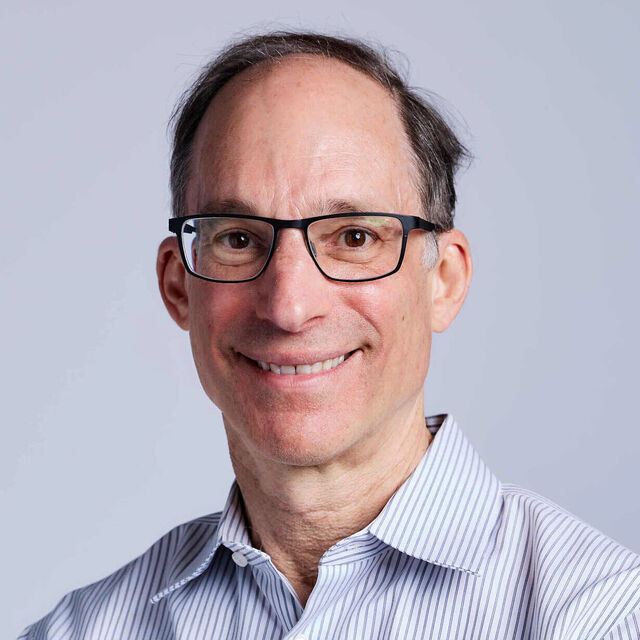
avatar for Bruce Fram

Bruce Fram

CEO, AppSecAI

Bruce Fram is the CEO of AppSecAI, his and was a six-time venture-backed CEO before including being the CEO of Contrast Security. He started as a hands-on coder, spent two decades running companies instead of writing code, and credits GenAI with handing the ability to answer complex... Read More →
Friday November 6, 2026 11:30am - 12:15pm PST
Room: Grand Ballroom B (Street Level)

1:15pm PST

So you think AI writes secure code?
Friday November 6, 2026 1:15pm - 2:00pm PST
Software development is becoming AI-assisted at every stage — design, coding, testing, bug fixing — and AI agents are increasingly doing it all. But do AI coding assistants actually write secure code by default? Most of the conversation around AI and security focuses on AI finding vulnerabilities. Far less attention goes to how state-of-the-art coding agents behave when they're the ones writing the software in the first place.

We built an automated harness to answer this directly — generating and evaluating over 2,500 code samples across multiple languages, models, and coding tasks, then scoring them with SAST tooling for introduced vulnerabilities. We tested vanilla generation against several security-steering approaches, from a single-line instruction file to a full set of layered security skills, to see which techniques move the needle, and at what cost.

In this talk, we'll walk through the harness architecture, share our full results — including where steering helped, where it hurt, and why — and lay out a practical framework for guiding coding agents toward secure defaults without paying an unsustainable token or performance tax. Attendees will walk away with a reusable methodology for evaluating their own AI coding assistants, and concrete, evidence-backed steering techniques they can apply immediately.

Key Takeaways
- A reusable methodology for benchmarking any coding assistant or model for security regressions before rolling it out to developers
- Evidence on which security-steering techniques actually reduce vulnerabilities, and by how much
- An understanding of the token-cost and latency tradeoffs of different steering approaches
- A practical framework for shifting security left into the AI-assisted SDLC
Speakers
SD

Shruti Datta Gupta

Product Security Engineer, Adobe
Shruti Datta Gupta is a Product Security Engineer at Adobe where she works in the Security AI & Data Engineering team. Her current role involves building AI-powered tools to automate security processes and reduce engineering toil. She is passionate about applying AI to solve cool... Read More →
avatar for Joseph Seasly

Joseph Seasly

Security AI & Data Engineer, Adobe

Joseph does Security AI and Data Engineering at Adobe. In his former life, he spent 13 years in the U.S. Intelligence Community working in a variety of agencies, technical roles, and missions.
    linkedin.com/in/josephs1000
... Read More →
Friday November 6, 2026 1:15pm - 2:00pm PST
Room: Grand Ballroom B (Street Level)

2:15pm PST

When Nobody Wrote the Code: Engineering Lessons from Building AI-Native Application Security
Friday November 6, 2026 2:15pm - 3:00pm PST
We didn't set out to rethink Application Security.

Our goal was much simpler: remove repetitive security work without reducing engineering confidence.

Like many security teams, we began introducing AI into parts of our AppSec workflow—reviewing pull requests, proposing remediation, assisting with threat modeling, validating findings, and helping developers move faster without sacrificing security.

Some things improved almost immediately.

Others became unexpectedly harder.

The first surprise wasn't model quality—it was review capacity. As AI started proposing fixes faster than engineers could reasonably validate them, we discovered that generating secure code was no longer the difficult part. Deciding whether that code could be trusted was.

We also found ourselves asking questions we hadn't expected. Why were experienced reviewers approving changes they couldn't realistically read? Why were different AI workflows confidently disagreeing with each other? Why were we spending less time finding vulnerabilities and more time deciding which results deserved human attention?

As these experiments accumulated, one theme kept reappearing. The biggest shift wasn't simply that AI generated more code—it reduced the cost of implementation while exposing new bottlenecks in review, verification, governance, and evidence. That, in turn, led us to question several engineering assumptions that quietly shape today's AppSec practices.

This session shares the implementation journey behind those discoveries. Through practical engineering experiments, implementation mistakes, and lessons learned, we'll explore how familiar AppSec practices—including secure coding, threat modeling, SAST, DAST, CI/CD security, and supply chain security—continue to matter while evolving for AI-assisted software engineering.

This isn't a talk about replacing today's AppSec practices.

It's about understanding which assumptions continue to hold, which ones deserve to be revisited, and how security teams can evolve their existing programs for a world where generating software is becoming easier while proving software is trustworthy is becoming the harder engineering problem.
Speakers
avatar for Manoj Kumar Yuvanesh

Manoj Kumar Yuvanesh

Senior Manager, Trust Data Platform, Autodesk Inc

Manoj Kumar Yuvanesh is a Senior Engineering Manager at Autodesk, where he leads the Trust Data Platform within the Trust Organization.

His work focuses on building large-scale data systems and security automation capabilities that help organizations understand and improve their security posture. With deep experience across security tooling, architecture, and cloud platforms, he drives initiatives that integrate security... Read More →
avatar for Uday Bhaskar Seelamantula

Uday Bhaskar Seelamantula

Principal Application Security Engineer, Autodesk

Uday is a principal security engineer at Autodesk, where he focuses on securing applications at the intersection of traditional software and emerging AI features. His work spans offensive research, fuzzing, threat modeling, building guardrails and integrating security into the SDLC... Read More →
Friday November 6, 2026 2:15pm - 3:00pm PST
Room: Grand Ballroom B (Street Level)

3:30pm PST

Pre-Flight Security Review for MCP Servers Using the OWASP MCP Top 10
Friday November 6, 2026 3:30pm - 4:15pm PST
Since Anthropic released MCP as an open standard, enterprises have started adopting it as a common way to connect AI agents with tools, data sources, and business workflows. Many teams are now building MCP catalogs for internal developers, platform teams and external partners.

However, the security posture of these MCP servers is often not reviewed before they are added to a catalog or connected to an AI agent. In many cases, deeper security testing starts only after the MCP server is already in use.

Recent research has shown how a malicious or poorly reviewed MCP server can expose sensitive data, influence an agent’s behavior or override instructions given by the user. This makes MCP discovery an important early checkpoint for developer pre-flight checks, security approval, third-party MCP review, vendor or partner assessment and agent platform onboarding.

For traditional applications, software bills of materials (SBOMs) and configuration drift checks help teams understand what is being adopted and what has changed. MCP servers need a similar approach. In this talk, I will walk through a three-layer MCP BOM model: Discovery, Verified, and Runtime.

I will focus on the Discovery BOM and show how static MCP discovery can surface early indicators of tool poisoning, command injection and execution, context injection and over-sharing, credential-like inputs and risky tool capabilities. I will demonstrate this using an open-source tool that discovers MCP metadata and capabilities, runs static checks with YARA rules and maps findings to the OWASP MCP Top 10.

The goal is not just to scan an MCP server once, but to use discovery output as a pre-flight check: to review MCP servers before approval, detect MCP configuration and metadata changes in CI/CD, build safer MCP catalogs and create the first version of runtime monitoring and policy decisions.

Attendees will leave with a practical way to inspect MCP servers before agents use them, map exposed capabilities to OWASP MCP risks, compare MCP configuration drifts over time and answer a basic but important question during MCP security review: "What should be allowed, reviewed, or denied before the agent uses this MCP server?"
Speakers
avatar for Vinothini Raju

Vinothini Raju

Founder & CEO, gopaddle.io
Vinothini Raju, is the Founder & CEO at gopaddle.io. She has been awarded the B2B Woman Tech Entrepreneur of the Year, 2023 by Women In Cloud & Insight Enterprises. Under her leadership, gopaddle focuses on building a next-generation platform for cloud native applications​. Her... Read More →
Friday November 6, 2026 3:30pm - 4:15pm PST
Room: Grand Ballroom B (Street Level)
 
Share Modal

Share this link via

Or copy link

Filter sessions
Apply filters to sessions.