Loading…
Venue: Room: Seacliff AB (Bay Level) clear filter
arrow_back View All Dates
Friday, November 6
 

10:30am PST

When Finding Bugs Is the Easy Part: Lessons from an Agentic Vulnerability Harness
Friday November 6, 2026 10:30am - 11:15am PST
The finding that shifted our thinking on chain analysis was a session-handling weakness rated medium-severity in isolation. Once we traced the chain — an API leaking session identifiers without an access-control check, feeding a deterministic password derivation function — it was a full account compromise. Same code. Two severity tiers apart. Chain context doesn’t refine a finding; it changes what the finding actually is.

We ran a nine-step agentic harness across twenty large production applications at a financial-services organization: systems with years of prior pentest coverage, active bug-bounty programs, and conventional SAST already in CI. The harness surfaced over 400 verified vulnerabilities that the SAST tool did not catch — concentrated in categories pattern-based tools structurally cannot reach: absent authentication gates, authorization logic that exists but never enforces, secrets in configuration files outside the source scan boundary, unsigned token forgery, and multi-step attack chains.

Fewer than one in six findings overlapped between the two tools. SAST found roughly 90 true positives the harness missed — deep DAO-layer SQL injection, JSP template XSS — where its exhaustive per-call-site enumeration beat our coverage. The two tools are additive, not redundant. We nearly didn’t get there: the first run’s precision was too low to hand to any developer. Fixing it required structural changes — adversarial verification, deterministic filtering — not prompt tuning. That near-miss shaped everything that followed. This shift changed the primary metric we track — from how many issues are found to how quickly they are validated and closed in production. We now frame this as Mean Time to Adapt (MTTA) — the time from an initial signal to a validated fix in production.

The architecture is in enough detail to reproduce. The failure modes are specific: hallucinations that survived single-pass verification, chain severity that failed until it was made explicit in pipeline design rather than left to agent judgment.
Speakers
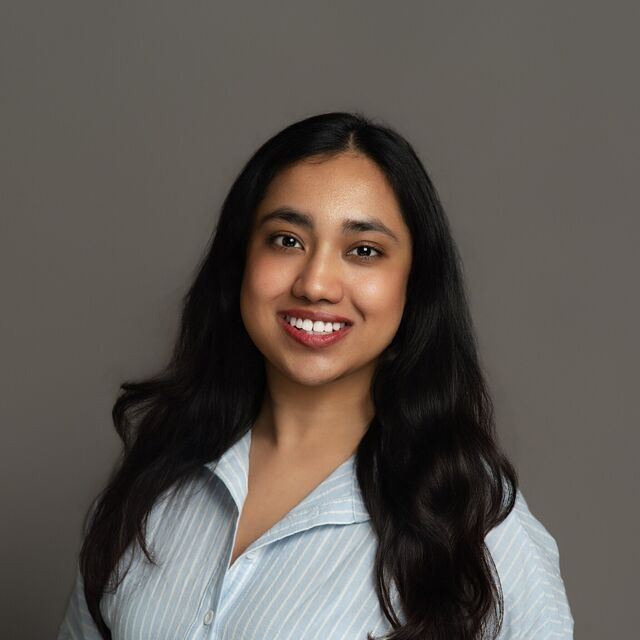
avatar for Venkata Suresh Sanga

Venkata Suresh Sanga

Sr Cybersecurity Engineer, Visa
Venkata Suresh, Sanga is a Sr Cybersecurity Engineer at Visa, where he runs the SAST, SCA, and DAST detection portfolio. His current focus is an agentic harness that cuts the noise those tools produce and is measured by one number: Mean Time to Adapt.

  linkedin.com/in/venkatasu... Read More →
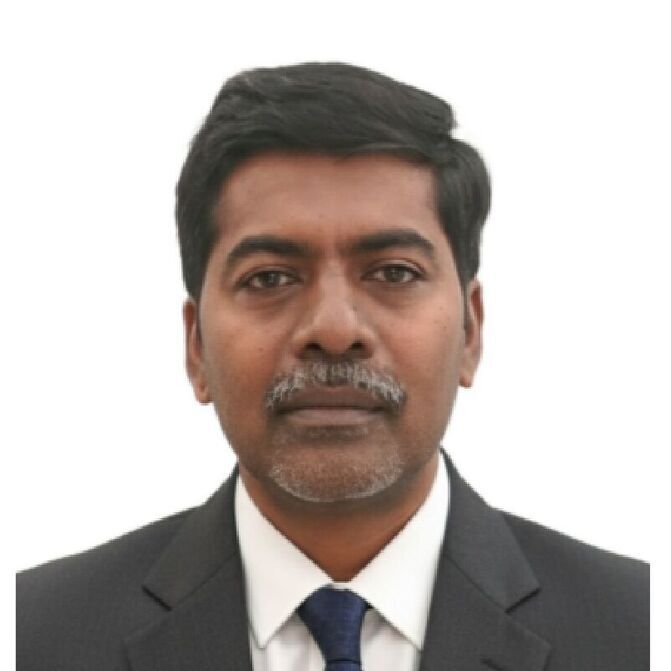
avatar for Milind Daftari

Milind Daftari

Cybersecurity Engineer, Visa
Milind Daftari is a Cybersecurity Engineer at Visa with a Masters in Cybersecurity from New York University who thrives on turning security from a blocker into an enabler. He’s built and owned security from the ground up—shaping secure architectures, automating vulnerability scans... Read More →
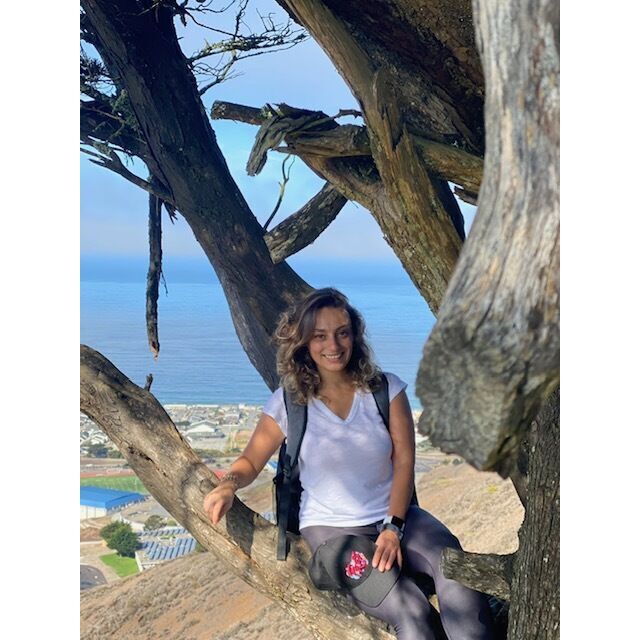
avatar for Yuliana Martirosyan

Yuliana Martirosyan

Visa
Do the good by doing right
  
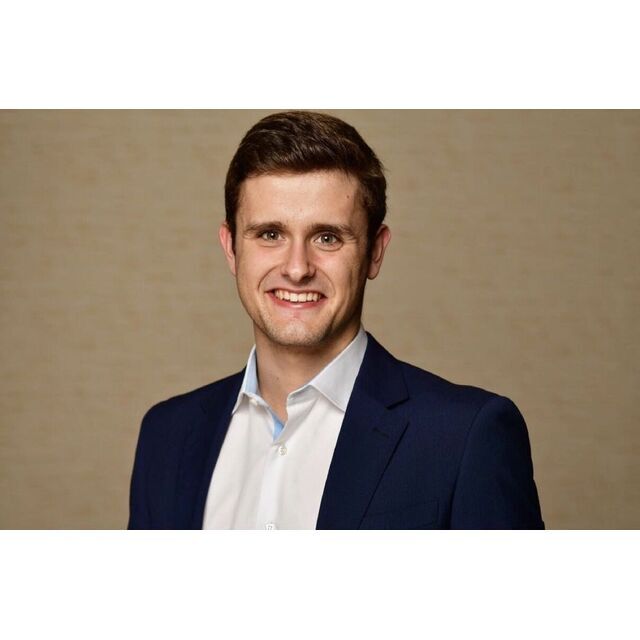
avatar for Daniel Fernandez Coviella

Daniel Fernandez Coviella

Senior Cybersecurity Engineer, Visa
Daniel Fernandez is a Senior Application Security Engineer at Visa, where he focuses on application security, AI security, and secure software engineering at enterprise scale. His work includes integrating AI into the secure development lifecycle, building developer security tooling... Read More →
Friday November 6, 2026 10:30am - 11:15am PST
Room: Seacliff AB (Bay Level)

11:30am PST

Context Confusion Is the New Broken Access Control
Friday November 6, 2026 11:30am - 12:15pm PST
Broken access control has always been one of the most damaging application security risks. In traditional applications, the failure is usually clear: a user can access an object, record, file, or action they should not be able to access. AI applications make this problem harder because the security boundary is no longer just the object. It is also the conversation, retrieved context, generated answer, prior file selection, user role, and system memory around the interaction.

This talk focuses on a practical and under-tested failure mode in enterprise AI applications: context confusion. A user may be correctly authenticated and authorized, but the AI assistant may still answer using stale, over-broad, mixed, or unauthorized context. This can happen when users switch files mid-conversation, when retrieval pulls from a larger corpus than intended, when conversation history persists across data boundaries, or when the final answer combines allowed and disallowed information in a way that traditional access-control testing does not catch.

The session reframes AI data leakage as an AppSec testing problem rather than a model behavior problem. Attendees will learn how to test context boundaries across multi-turn conversations, file selection flows, retrieval systems, role changes, and generated responses. The talk will introduce a practical test matrix for identifying context bleed, authorization drift, stale retrieval, and response-level disclosure. It will also show how to capture useful evidence for engineering teams without turning the assessment into a vague “AI safety” review.

The goal is to give AppSec teams a concrete way to ask: did the application answer from the right context, for the right user, at the right time?
Speakers
avatar for Anusha Vajha

Anusha Vajha

Security Engineer and Product Manager
Anusha Vajha is a cybersecurity practitioner focused on AI governance, product security, and enterprise AI risk. She has worked across security operations, GRC, detection engineering, and product security in healthcare, financial services, and startup environments.
Her work sits a... Read More →

Friday November 6, 2026 11:30am - 12:15pm PST
Room: Seacliff AB (Bay Level)

1:15pm PST

XSS is the new RCE: How we broke Tauri's security model
Friday November 6, 2026 1:15pm - 2:00pm PST
Tauri is a fast-growing and rapidly adopted framework for building desktop applications, with 100k+ stars on GitHub, used by thousands of popular apps. When the v1 version of the framework was found to be insecure, v2 emerged as the secure solution. Our talk will provide an overview of Tauri’s security blind spots and demonstrate them through a full RCE exploitation using vulnerability chaining against a popular app ecosystem with 50k+ stars on GitHub, along with additional similar PoCs on popular apps. We will conclude by showing how Tauri developers can write more secure apps with the framework.
Speakers
avatar for Yuval Moravchick

Yuval Moravchick

Vulnerability Research Team Leader, JFrog

Yuval is the vulnerability research team leader at JFrog. With over 10 years of technical experience, he has built and led security teams at various organizations, specializing in penetration testing, security research, and the development of offensive tools. Before JFrog, he held... Read More →
Friday November 6, 2026 1:15pm - 2:00pm PST
Room: Seacliff AB (Bay Level)
  Testing

2:15pm PST

The Hidden Risks of Service-to-Service Trust in Microservice Architectures
Friday November 6, 2026 2:15pm - 3:00pm PST
Modern applications increasingly rely on microservice architectures where APIs, backend services, and cloud workloads continuously communicate with one another. While organizations focus heavily on authenticating end users, service-to-service trust relationships are often implemented with excessive implicit trust, weak authorization boundaries, and inconsistent validation controls.

This talk explores how attackers abuse trust relationships between internal services to move laterally, escalate privileges, and access unintended resources inside distributed application environments. We will examine practical attack scenarios involving internal API trust, token forwarding, over-permissioned service identities, and insecure authorization assumptions between microservices.

Through architectural walkthroughs and demonstrations, attendees will learn how trust propagation inside distributed systems creates hidden attack paths that are difficult to detect using traditional security testing approaches.

The session also provides actionable guidance for securing service-to-service communication, including zero-trust design principles, token validation between services, least privilege for service identities, and authorization enforcement at every layer of the application.

Attendees will leave with practical strategies for reducing lateral movement and strengthening trust boundaries in cloud-native applications.
Speakers
avatar for Bhaumik Shah

Bhaumik Shah

CEO, SecurifyAI
Bhaumik Shah is a cybersecurity leader and founder of Securify, where he helps organizations secure their cloud, applications, and infrastructure through penetration testing, red team operations, and compliance programs like SOC 2 and ISO 27001. With over a decade of experience uncovering... Read More →
Friday November 6, 2026 2:15pm - 3:00pm PST
Room: Seacliff AB (Bay Level)

3:30pm PST

Finding the Infrastructure Trust Layer: AI-Assisted Discovery of Cross-Product SSRF Classes
Friday November 6, 2026 3:30pm - 4:15pm PST
Standard SSRF mitigations are written around a specific threat model: an attacker reaching RFC 1918 space or link-local addresses through an application. Block 10.0.0.0/8, 172.16.0.0/12, 192.168.0.0/16, 169.254.0.0/16, done. This model works for application-layer SSRF.

IaaS platforms have a second trust layer this model does not address. When a platform builds internal services - request routing, worker scheduling, data pipeline sinks - those services communicate over a network the application-layer blocklist does not see. CGNAT space (100.64.0.0/10) is one example: used for internal carrier routing and often present in IaaS backend networks, but it appears in neither RFC 1918 nor link-local blocklists.

I spent several months building an automated pipeline to probe IaaS attack surfaces, and the same root cause kept appearing across unrelated products from the same provider: different entry points, same internal network reachability, same CGNAT address class. Four products, one underlying issue.

The automation made the pattern visible. A human researcher testing one product at a time would likely miss the connection. The pipeline - scanner output fed to an LLM reasoning layer that classifies, clusters, and flags for human review - surfaces structural patterns that individual test results obscure.

This talk covers: the technical mechanics of CGNAT SSRF (probes, indicators, what a response tells you), how I built the LLM-assisted research pipeline, how to structure a consolidated disclosure when you find a vulnerability class instead of a single bug, and what to look for when testing your own IaaS-hosted services.

Research conducted via responsible disclosure. Will be fully public before November 2026.
Speakers
avatar for Ofri Ouzan

Ofri Ouzan

Security Researcher, JFrog Security
Ofri Ouzan is a security researcher at JFrog Security. With over 6 years of experience in the cybersecurity field, she specializes in conducting security research focusing on vulnerabilities and exploitation. Ofri excels at exploring new technologies and developing solutions to address... Read More →
avatar for Stav David

Stav David

Founder building automated offensive security tooling

Stav David is a security researcher and founder who builds automated offensive security infrastructure. He started by building multi-cloud DDoS attack simulation tooling - real bot fleets testing whether mitigation vendors actually block what they claim to block. The recon pipeline... Read More →
Friday November 6, 2026 3:30pm - 4:15pm PST
Room: Seacliff AB (Bay Level)
 
Share Modal

Share this link via

Or copy link

Filter sessions
Apply filters to sessions.
Filtered by Date -